
Guide to Muscle Strain and Sprain Relief
If you’ve ever undertaken physical activity, chances are you’ve had a strain or sprain at some time or another. Strains and sprains are common injuries and can occur because of sports, gardening, workplace activities and even doing the housework.1,2
Although they might feel the same, strains and sprains are different conditions because they can affect different tissues within the body.1
In this page, we’ll look at some aspects around strains and sprains, especially:
- The difference between strains and sprains
- How to determine injury severity
- Preventing of strains and sprains
- Relief of pain from strains and sprains


In this article:
- What are strains and sprains?
- How are strains and sprains different?
- How severe is my sprain or strain?
- Preventing strains and sprains
- What should I do if I have a strain or sprain?
What are strains and sprains?
Whilst it might seem common to use the terms strains and sprains interchangeably, they do in fact refer to different injuries.1,3,4
Strains refer to damage to the muscles or tendons, a tendon is a band of connective tissue that joins a muscle to a bone.1,3 Sprains on the other hand refer to damage of the ligaments, these are the bands of connective tissue that join bones together in a joint.1,4
How are strains and sprains different?
With an understanding of the terminology difference between strains and sprains, let’s look at how they differ as a result of injury.
Strains
Acute strains occur immediately after the muscle or tendon is injured.5 They occur from any activity which causes the muscle or tendon to undergo excessive tension or lengthening resulting in an injury.6
People with a strain may experience pain, muscle spasm, muscle weakness, inflammation or cramping.7 Muscles that commonly get strains include the back, hamstring(s), elbow (especially in racquet sports or throwing activities), and hands (especially in sports that require gripping like gymnastics, golf or rowing).7
Sprains
Sprains are injuries to the ligaments when they get lengthened beyond their normal elastic limit.8 Typical symptoms are pain, bruising, swelling and inflammation.5 Depending on the activity, different joints can be at risk for a sprain.9 For example, activities involving jumping such as hurdling, netball, volleyball or basketball or even running on an uneven surface can cause foot, knee or ankle sprains.9 Falling on an outstretched hand can cause a wrist sprain.9
There are a range of activities that can result in both sprains or strains, from workplace activities to sporting pursuits.2,10 In the Australian workplace, sprains and strains were the most common injury reported over 2017-2018.*2 The most common ways for workers to get injured were from lifting, pushing, or bending.2
In terms of body area, ankle ligament sprains are a common injury that people usually seek medical help for.11 Sports like basketball, athletics and soccer are often how people sustain these injuries .11,12
*Australian Bureau of Statistics. Work Related Injuries: July 2017-June 2018.
How severe is my sprain or strain?
For strains, one way severity can be checked is by seeing how much flexibility and strength has been lost compared to before the injury happened.6
The more severe the injury, the less flexibility and strength there will likely be.6 For sprains there is a formal grading system which can help assess how much tissue damage there is.7
First degree sprains
The ligaments have been injured, but may not be torn, or may be only slightly torn. Pain is often mild, and there is generally little or no swelling or bruising. You should be able to put weight on the affected joint in a first-degree strain or sprain, because the joint is still stable.7
Second degree sprains
The ligament(s) has been stretched and partially torn. These injuries are usually accompanied by bruising, swelling and moderate pain, and you may have difficulty using the affected joint or muscle.7
Third degree sprains
This is usually severe, where the ligament is almost completely torn. Not surprisingly, these injuries usually cause severe pain, swelling and bruising, and you will be unable to use the affected body part.7 These injuries can be serious and may require surgery and rehabilitation.7
If you are unsure about the severity of your strain or sprain, or are concerned for any reason, seek advice from your doctor or physiotherapist.13
Preventing strains and sprains
There are some ways that strains and sprains can be avoided, and these include:
- Minimise the risk of slips and falls by wearing the right shoes: make sure they fit well and replace them if the tread is worn out14
- Taping or braces can help prevent injury, especially for those with previous sprains15
- Avoid running on uneven surfaces15
- Don’t exercise or play sport if you’re tired or in pain16
- Use or wear appropriate equipment for sports17
What should I do if I have a strain or sprain?
Thankfully there are some proven management options for strains and sprains.
Rest Ice, Elevation and Recovery (RICE)
One option for recovery and one you may have heard of is rest, ice, compression and elevation or RICE. It’s the first thing to do to help a muscle strain or sprain.1,6,8 To help injured tendons and ligaments heal faster, it’s also best to stop exercising and limit other activities for a while.7
To help manage the injury you want to try and limit any swelling, this can be done by:
- Putting an ice pack on the affected area for 10 minutes every 1-2 hours, continuing this for up to 48 hours.18
- Bandaging the site or use elastic wrap to apply compression.7
- Keeping the injured area elevated to above the level of the heart, by placing it on a pillow.7
Pain relievers
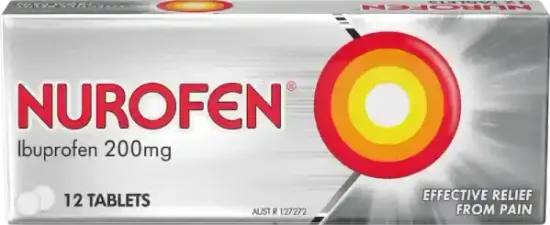
For ligament sprains, non-steroidal anti-inflammatory medicines (NSAIDS) like Nurofen can help reduce pain.8 However, for strains paracetamol is generally recommended. If symptoms persist, talk to your doctor or pharmacist.6 For convenience, some anti-inflammatory medicines are available as gels or creams that can be applied to the skin around a strain or sprain.7
See your doctor
It’s a good idea to get a strain or sprain checked out, especially if it is impacting your quality of life and day-to-day activities.7 If symptoms get worse in the first 24 hours it’s important to seek medical advice.13
This article is for general information only and not intended as a substitute for medical advice. All information presented on these web pages is not meant to diagnose or prescribe. In all health-related matters, always talk to your healthcare professional.
Always read the label and follow the directions for use. Incorrect use could be harmful.
RB-M-04380.
References
- Braund R. The Pharm. J. 2006; 276: 655-56.
- Australian Bureau of Statistics. Work Related Injuries: July 2017-June 2018 [internet]. Published Oct. 2018 [cited Oct. 2022]. Access from: https://www.abs.gov.au
- Bordoni B. & Varacallo M. National Library of medicine. StatPearls Publishing LLC [Internet]. Anatomy, Tendons. Treasure island (FL). Last Update: July 2018 [Accessed Oct. 2022]. Access from: https://www.ncbi.nlm.nih.gov/books/NBK513237/
- Wu, F. et al. EFORT Open Rev. 2017;2(7):332-34
- Lee B, et al. Musculoskeletal Sports and Spine Disorders. 2017. Springer, Cham. https://doi.org/10.1007/978-3-319-50512-1_65
- Management principles for muscle strain or tear. In: Therapeutic Guidelines [digital]. Melbourne: Therapeutic Guidelines Limited; Mar. 2017 [cited Oct. 2022]. Access from: https://www.tg.org.au
- McGriff-Lee N. J of Pharm. Pract. 2003; 16(1):51–58.
- Management principles for ligament sprain or tear. In: Therapeutic Guidelines [digital]. Melbourne: Therapeutic Guidelines Limited; Mar. 2017 [cited Oct. 2022]. Access from: https://www.tg.org.au
- Tamayo, N.C.R., Hyppolite, N. Musculoskeletal Sports and Spine Disorders. 2017. Springer, Cham. https://doi.org/10.1007/978-3-319-50512-1_23
- Waterman BR, et al. J. Bone Joint Surg. Am. 2010;92(13):2279-84
- Green T, et al. BMC Musculoskelet. Disord. 2019; 20(1): 394
- Halabchi F & Hassabi M. World J Orthop . 2020; 11(12): 534–58
- Sprains & Strains. Australian Govt. Dept. of Health and Aged Care. Health Direct [internet]. Last Update, June 2022 [cited Oct. 2022]. Access from: https://www.healthdirect.gov.au/sprains-and-strains
- Vuurberg G. et al. Br J Sports Med. 2018;52(15):956
- Yin L & Wang L. Front Physiol. 2020; 11: 192
- Verschueren, J. et al. Sports Med. 2020;50(4):767-84
- Matharu GS. et al. Trauma. 2010;12(2):105-15.
- Introduction to Limb Conditions. In: Therapeutic Guidelines [digital]. Melbourne: Therapeutic Guidelines Limited; Mar. 2017 [cited Oct. 2022]. Access from: https://www.tg.org.au
First published: 17th February 2021
Last updated: 4th June 2025
Important information
This medicine may not be right for you. Read the label before purchase. Follow the directions for use. Incorrect use could be harmful. If symptoms persist, talk to your health professional.
This article is for general information only and not intended as a substitute for medical advice. All information presented on these web pages is not meant to diagnose or prescribe. In all health-related matters, always consult your health professional.
To help with body pain
Nurofen Pain & Inflammation Relief Tablets 200mg
Nurofen Pain & Inflammation Relief Tablets 200mg is effective in the temporary relief of pain and/or inflammation associated with: headache, migraine headache.Pain & Inflammation Relief Pain & Inflammation Relief![Nurofen Pain & Inflammation Relief 12 Tablets 200mg]()
Nurofen Zavance Fast Pain Relief Liquid Capsules 200mg
Nurofen Zavance Fast Pain Relief Liquid Capsules 200mg Nurofen Australia is effective in the temporary relief of pain and/or inflammation.Fast pain relief Fast pain relief![Nurofen Zavance Pain Relief Liquid 10 Capsules 200mg]()




Need more advice?
Aching Joints: Causes and Relief
Joint pain is a common complaint, particularly affecting us as we get older. If your joints have been affected by an injury or condition, it can cause aches and pains that affect your ability to move around normally. Our joints contain many nerves that carry pain signals when...Body pain Body painSprained Ankle: Symptons & Relief
You may have sprained an ankle tripping up the stairs. Or hurt it while exercising at the gym. Regardless, the result is the same. It can really disrupt your day. Typical signs of a sprained ankle are swelling, tenderness, pain and sometimes bruising, otherwise known as...Body pain Body pain

