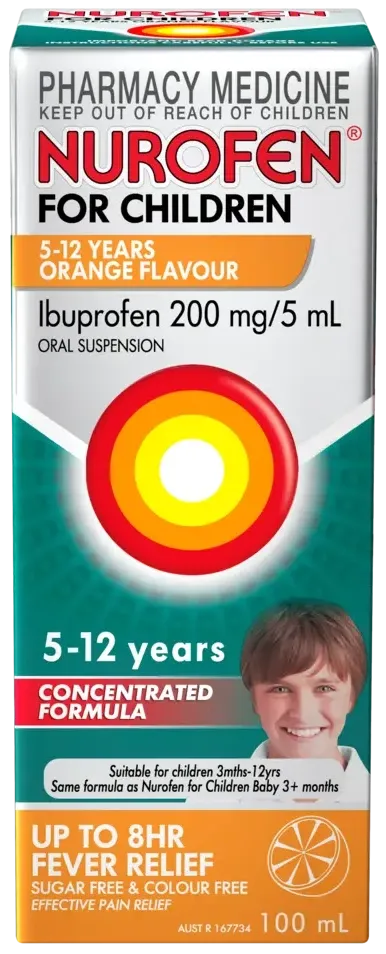
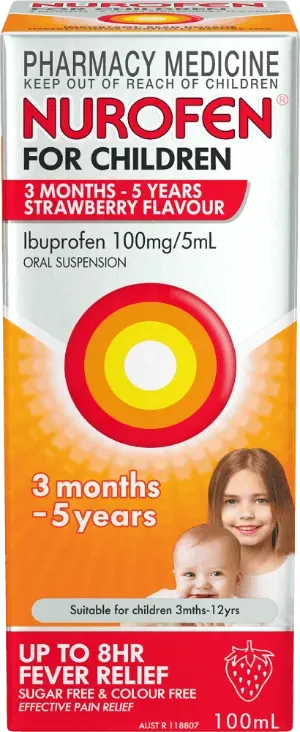
Nurofen for Children 5 to 12 Years Concentrated Pain & Fever Relief Ibuprofen 200mg/5ml Orange

As your baby begins to interact with the world, it is not unusual for them to get a mild fever. A fever isn’t an actual illness itself - it’s a sign of one and can be caused by many things, including a simple cold or your baby’s first vaccinations. The signs of fever in babies can vary depending on the underlying cause, but here are some of the most common signs to look out for if you suspect your baby has a fever.
If you’re worried that your baby may have a fever, you should check their temperature with a thermometer.
When to see your doctor:
If your baby is under three months and has a fever above 38°C, or if your child is immunocompromised (has a weakened immune system) due to a medical condition or medical treatment and has a fever above 38°C, then you should see a doctor, even if they have no other symptoms.
For all other children, take them to see a doctor if their temperature is above 38°C and they have any of the following symptoms:
Also take your child to a doctor if they:
Remember that what is considered normal temperature for the forehead isn’t necessarily the same as normal temperature for other parts of the body, so it’s important to know what temperature your thermometer should be reading depending on which type of baby thermometer you are using.
More often than not, your baby’s fever will pass after a few days with no complications. A rising temperature is the body's way of fighting off illness, so although it’s worrying when your baby has a fever, it does mean that their immune system is working the way it should be. However, if they seem unwell and you are concerned, it is important to seek medical advice from your doctor.

Feeling shivery on the outside, can be an indication of a fever. If you suspect your baby has a fever, check their temperature with a thermometer. f your baby does have a high temperature, dress them as comfortably as possible, encourage lots of rest and keep the room well aired.
When your child has a fever, their forehead, back or stomach may feel hot. For an accurate reading of your baby’s temperature, you should use a thermometer. If your baby does have a high temperature make them comfortable and try offering liquids such water, diluted juice, milk or whatever they usually drink.
You know your baby best so trust your mother’s instinct. Crying more than usual, or a cry that sounds different, could be related to a fever. Equally, if your baby seems more lethargic this could also be associated with your child’s fever. Keep an eye on your baby and monitor their temperature regularly with a thermometer. If you are concerned you should visit your GP or speak to a medical professional for advice.
If you notice that your baby does not want to drink as much as usual, or eat if they are old enough for solid foods, it could mean that something isn’t quite right. Offer regular feeds to keep them hydrated and note down how much your baby is feeding, so that you can talk to your doctor if you’re concerned.
RB-M-04524
First published: 25th May 2021
Last updated: 16th June 2025
This medicine may not be right for you. Read the label before purchase. Follow the directions for use. Incorrect use could be harmful. If symptoms persist, talk to your health professional.
This article is for general information only and not intended as a substitute for medical advice. All information presented on these web pages is not meant to diagnose or prescribe. In all health-related matters, always consult your health professional.