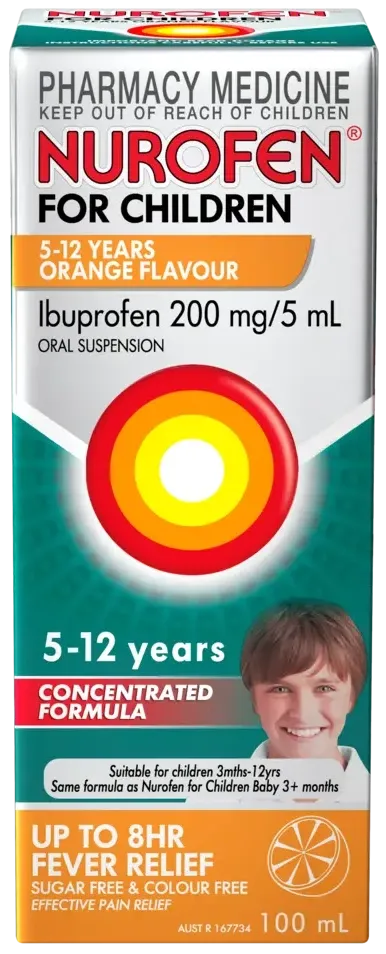
Nurofen for Children 5 to 12 Years Concentrated Pain & Fever Relief Ibuprofen 200mg/5ml Orange

Earache is a common complaint that can occur at any age, but it is especially common in young children.1 Unfortunately, babies and young children are more prone to middle ear infection, known as otitis media.2 This common type of earache happens when the middle part of the ear becomes inflamed, which can occur after a mild viral infection like a cold.3
Earache can be distressing for children as well as parents when they see their young child in pain. So, it’s good to know what earache symptoms to look out for, the causes of earache, and how to treat an earache in a child.
Earache simply means having a sore ear. Earaches in kids commonly occur when fluid or pus from an infection builds up in the ear canal, behind the ear drum.2 The fluid puts pressure on the eardrum causing it to bulge and become painful.1 Sometimes the ear drum bursts, releasing the fluid so the child feels better. Other times, after a middle ear infection, the ear can fill up with thick fluid that can be hard to remove – this is known as ‘Glue ear’ and becomes less common as the child grows older.2
4 out of 5 children will get a middle ear infection at least once in their lives.*2 This is most likely to happen by the time they turn 2 years old.3 The reason that young children and infants are more likely to get an ear infection is because they are still building up their immunity and are more prone to getting colds that can cause an ear infection. Since the tube that connects the middle ear to the nose, called the Eustachian tube, is smaller in young children, it becomes more easily blocked.4 When the Eustachian tube becomes blocked, germs can grow, causing the middle ear to become infected and inflamed.2,4 Usually by the time they’re six, your child’s inner ear tubes will have matured enough to be less prone to infections. Therefore, ear infections and earache are generally less common after the age of 6.1,2
*Better Health Channel – Ear problems in children.
As mentioned, infections like a cold commonly cause earache in children when fluid or pus from an infection builds up in the ear canal – this is called otitis media.2 This type of earache, caused by germs accumulating in the ear canal, places pressure on the eardrum and can lead to pain and inflammation in the ear.3
Earache can also be caused by inflammation or infection in the outer ear canal. Swimmer’s ear, also known as otitis externa, can occur if your child regularly gets water in their ear – such as when swimming. This is because a wet ear canal is easier to get infected.5
Other things that can cause earache include changes in air pressure – for example when flying on the plane during take-off and landing, injury to the ear, a build-up of ear wax and/or dental issues.6
Earache symptoms can vary depending on what causes the earache. If you’re worried about your children’s earache and suspect they might have middle ear infection, always check with your doctor. Signs and symptoms of an infection can include:2,3
Symptoms of Swimmer’s ear are similar to the symptoms listed above but may also include a squelching or popping sensation, or tenderness when your child moves their ear or jaw. They may also feel pressure or fullness in the ear.5 Since the outside of the ear can be inflamed, you may be able to see some redness and swelling.5 The severity of pain can vary with earache – your child may only feel slightly uncomfortable, or find their pain is worse when chewing.5
Symptoms associated with earache can resolve on their own, but irritation to the outer ear canal can make symptoms worse, for example if your child scratches their infected ear.5 So, it’s important to address the infection as soon as you see the signs.
If you’re wondering how to stop an earache fast in a child, it’s good to know that often infections can clear up themselves in as little as a few hours.2 However, if your child is in distress, it’s natural you’ll want to help them to feel better as quickly as possible. Thankfully, there are a few steps you can take to make them more comfortable.
Some children’s earache can be particularly distressing as it disrupts their sleep. So, if your child is old enough to use pillows, try propping them up on two or more pillows to help them sleep better.4
Usually, middle ear infections don’t require antibiotics as they can get better on their own within a week. However, if your child is experiencing pain, you may want to try pain relief medication that’s specially designed for kids.3 Nurofen for Children helps to relieve the pain and reduce fever in children aged 3 months to 12 years. It contains ibuprofen which can help with the inflammation associated with earache and infections like cold and flu.7
In addition to learning how to treat an earache in a child, it’s a good idea to take steps to prevent your child from getting an earache in the first place.
If your child attends day care, try to limit their time there as exposure to other children increases their odds of catching an infection like a cold. This can also help to prevent the spread of infections if your child is ill.2
As mentioned, Swimmer’s ear can occur in children who often swim as wet ears are more likely to get infected. Therefore, try to not let your child's ears stay so wet, for example by taking time off from swimming to reduce the likelihood of getting an infection, especially if you find they keep on getting ear infections.2
Also, keep in mind that passive smoking can increase the risk of infection, so always try to keep your child away from cigarette smoke.2
As mentioned, an earache can clear up within a week. However, earache can be the sign of something more serious, so you should see a doctor if your child has any of the following signs or symptoms:6
If you have any concerns about your child’s earache, speak to a healthcare professional and/or see your doctor.
This article is for general information only and not intended as a substitute for medical advice. All information presented on these web pages is not meant to diagnose or prescribe. In all health-related matters, always consult your healthcare professional.
Always read the label and follow the directions for use. Incorrect use could be harmful.
RB-M-04526.
First published: 25th May 2021
Last updated: 4th June 2025
This medicine may not be right for you. Read the label before purchase. Follow the directions for use. Incorrect use could be harmful. If symptoms persist, talk to your health professional.
This article is for general information only and not intended as a substitute for medical advice. All information presented on these web pages is not meant to diagnose or prescribe. In all health-related matters, always consult your health professional.