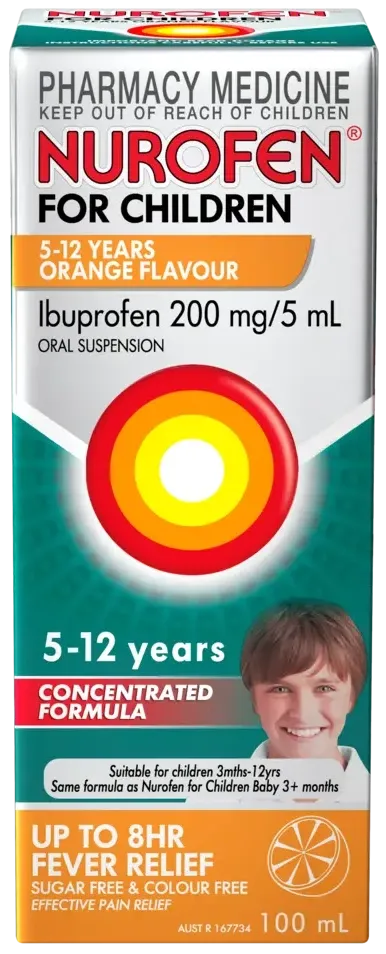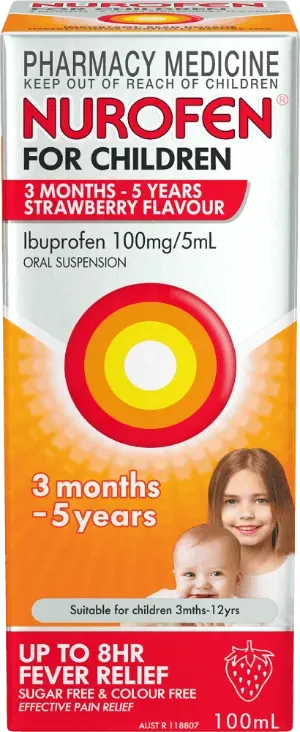
Nurofen for Children 5 to 12 Years Concentrated Pain & Fever Relief Ibuprofen 200mg/5ml Orange

While fevers are common in young children, the very first time a baby has a fever can be worrying for parents. To encourage symptomatic relief, it’s essential to be aware of the signs of fever and to know what you can do to help.
While the normal body temperature is around 37oC, fever is usually considered to be any reading over 38°C. Fever is one sign your child could be fighting off an infection. The rise in temperature helps your child’s immune system to get rid of the infection, by making it difficult for viruses and bacteria to survive.
Children’s temperatures can also rise for other reasons including teething, after vaccination or if they overheat because of excess bedding or clothing. Close monitoring is the key – that way you’ll know if the rise is a result of your child being tucked in too tightly.
You can generally tell your child has a fever by touching their forehead and by taking their temperature with a thermometer. However, a higher than normal temperature isn’t the only sign.
If a child has fever, they may also:
Although fever doesn’t always indicate a serious illness, you should always see your doctor if:
For all other children, take them to see a doctor if their temperature is above 38°C and they have any of the following symptoms:
Also take your child to a doctor if they:
You will naturally want to make comfort a priority when your child has a fever, and avoiding dehydration is important. Throughout the day, and during any restless periods at night, give your child small amounts of a clear fluid, such as water, to help keep them hydrated.
You may also want to try an over-the-counter analgesic designed specifically for children. Nurofen for Children contains ibuprofen, which relieves pain and can help reduce fever for up to 8 hours.*
*Autret-Leca E, et al. 2007.
RB-M-04525
First published: 25th May 2021
Last updated: 4th June 2025
References: 1. Ogoina 2011. 2. Institute for Quality and Efficiency in Health Care (IQWiG). InformedHealth.org. Fever in children: overview. 6 June 2019. 3. Davis 2013. 4. Royal Children’s Hospital Melbourne. Kids Health Information. Fever in Children. April 2021. 5. New Zealand Ministry of Health. Fever in Children. 11 February 2019. 6. Autret-Leca et al 2007.
This medicine may not be right for you. Read the label before purchase. Follow the directions for use. Incorrect use could be harmful. If symptoms persist, talk to your health professional.
This article is for general information only and not intended as a substitute for medical advice. All information presented on these web pages is not meant to diagnose or prescribe. In all health-related matters, always consult your health professional.