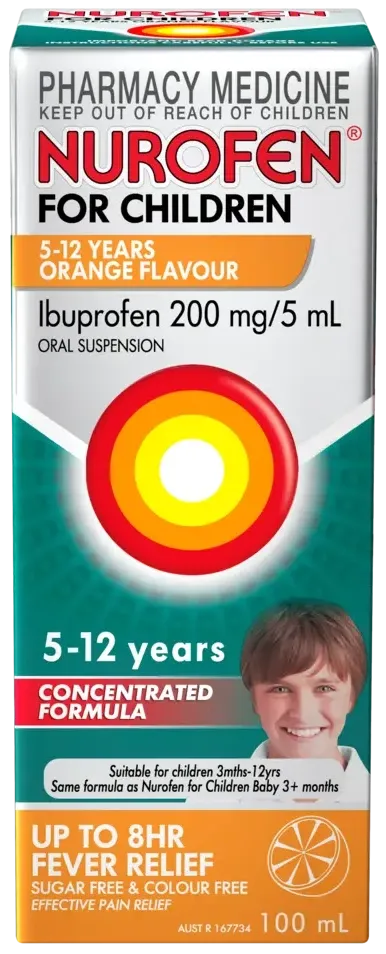
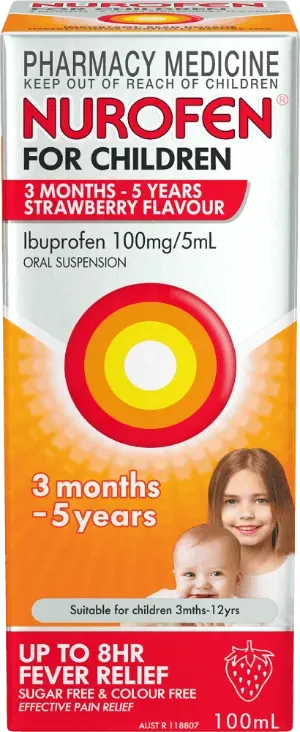
Nurofen for Children 5 to 12 Years Concentrated Pain & Fever Relief Ibuprofen 200mg/5ml Orange

From the little ones that give your child a tickle to the ones that are more painful, sore throats can interfere with your child’s life. Find out what causes a sore throat, and how to relieve it.
Sore throats (pharyngitis) are very common. They will normally improve on their own within a week. Sore throats are not an illness in themselves, but a symptom of something else, such as a viral or bacterial infection.
The most common cause of a sore throat is a viral infection, such as a cold or flu.
A sore throat that is caused by an infection will usually come with other symptoms, such as a cough, runny nose, fever, or headache.
If your child has an occasional mild sore throat and no other symptoms, it may have a non-infectious cause such as:
Pain in the throat is often a sign of inflammation. The symptoms that come along with a sore throat will depend on what’s causing it.

Most sore throats are caused by a virus and are self-limiting. This means they will usually get better on their own. You can help your child cope with discomfort in the following ways:
If you are unsure about the cause and appropriate treatment of your child’s sore throat seek advice from your doctor.
Sore throats can be prevented by taking steps to prevent the spread of the infections that cause them. An important way to help slow the spread of cold and flu infections is good hygiene, which starts with teaching your child how to wash their hands correctly. Hands should be washed with soap and water and dried thoroughly. Show your child how to thoroughly clean under their nails and between their fingers. Ask your child to wash their hands after coughing, blowing their nose, or sneezing. Also teach your child how to cover their coughs and sneezes and to try to avoid touching or allowing your child to touch the eyes, nose, or mouth of someone who is sick to help limit the spread of infection. It's also important to keep your child at home and away from others when they are feeling unwell.
These days this is now your first point of call. If your child is experiencing a sore throat you should see a doctor and practice social distancing and good hygiene practices. Phone ahead to check with your if your child is required to wear a mask on their way to and while they are waiting for their appointment. Then check in with your doctor again if your child:
You need to go to hospital urgently if your child has:
RB-M-06743
First published: 25th May 2021
Last updated: 4th June 2025
This article is for general information only and not intended as a substitute for medical advice. All information presented on these web pages is not meant to diagnose or prescribe. In all health-related matters, always consult your health professional.