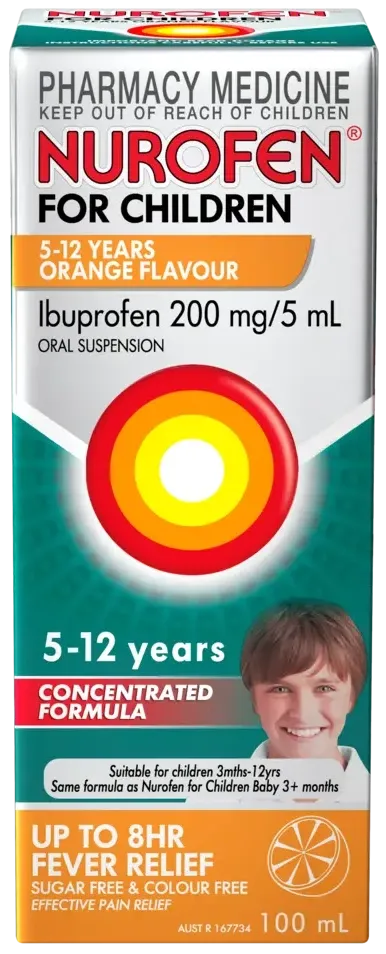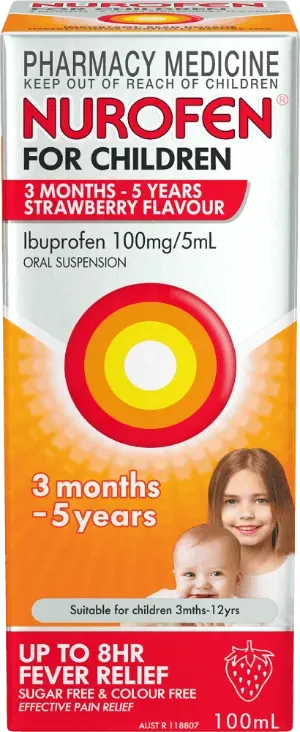
Nurofen for Children 5 to 12 Years Concentrated Pain & Fever Relief Ibuprofen 200mg/5ml Orange

Like any parent, you don’t want to see your child suffer. But unfortunately, pain is a fact of life. At one time or another, your child will experience it – whether through an accident or illness, or simply a part of growing up.
But how does your child feel pain? What purpose does it serve? We’re here to help you understand your child’s pain a little better.
Throughout your child’s body there are millions of nerve fibres, some of which end in pain receptors called nociceptors. These nerve fibres are constantly telling your child’s brain what is going on in their body and their environment.1
When your little one is ill or hurt, the nociceptors detect the tissue damage and transmit pain signals up the spinal cord and to the brain.2
At the same time, tissues around the affected area release chemicals called prostaglandins. When prostaglandins are released, they make nearby nerves very sensitive to pain and make these pain signals stronger.3
Pain caused by damage to the body’s tissues is sometimes referred to as nociceptive pain.4 Ask your doctor or pharmacist if you need information about other types of pain.
Pain is the body’s way of telling us that something, somewhere needs some attention.5
For example, if your child sprains an ankle, the pain tells them that they’ve hurt something and it needs to be looked at. They can then let you know.
Each person has their own individual tolerance for pain. Some children (and many adults) have very high pain thresholds, while others have a lower tolerance of pain.6
One reason for this is perception. The brain works by association, so if a child’s had a particularly painful experience in the past, their brain may link any future pain with this experience. As a result, they may find it more difficult to cope with the new pain.7
Pain thresholds are also affected by emotions. If your child is feeling worried, their threshold may be lower. On the other hand, strong emotions, such as excitement or fear, can help to reduce the intensity of the painful sensation.8
Before your child is able to speak, it can be hard to know exactly why they’re upset. Are they in pain or discomfort? Or is it something else?
Here are some of the signs of illness to look out for in your baby or toddler.
Your newborn or toddler could be ill if he or she:
If you feel worried or concerned about any of your child's symptoms, always consult with your doctor. If it is a medical emergency, dial 000.
Always read the label and follow the directions for use. Incorrect use could be harmful.
RB-M-106654
First published: 25th May 2021
Last updated: 4th June 2025
This medicine may not be right for you. Read the label before purchase. Follow the directions for use. Incorrect use could be harmful. If symptoms persist, talk to your health professional.
This article is for general information only and not intended as a substitute for medical advice. All information presented on these web pages is not meant to diagnose or prescribe. In all health-related matters, always consult your health professional.